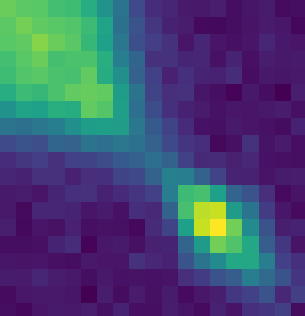
Cochlear Implants are arguably the most successful neuro-prosthetic device in existence today, and can provide a sense of hearing to d/Deaf individuals by directly stimulating their auditory nerve. Each cochlear-implant patient has a unique story and hearing status, and the ease with which they can communicate with their devices varies from person to person. This underlies a need for personalised hearing healthcare to maximise the hearing potential for individual users.
The Panoramic ECAP Method – or ‘PECAP’ – is a research tool that leverages objective measurements of neural responses to a cochlear implant and provides detailed estimates of variation in neural-activation patters along the length of the cochlea. In brief, it can provide a fingerprint of the way an individual cochlear implant patient’s ear is communicating with their implant. It is my hope that PECAP can be used to optimize the software of cochlear implants for individual patients’ unique patterns of hearing and enable them to better engage with the auditory world around them. For details about how the method works, you can check out the presentations on the media page, as well as the references below.
Method Validation
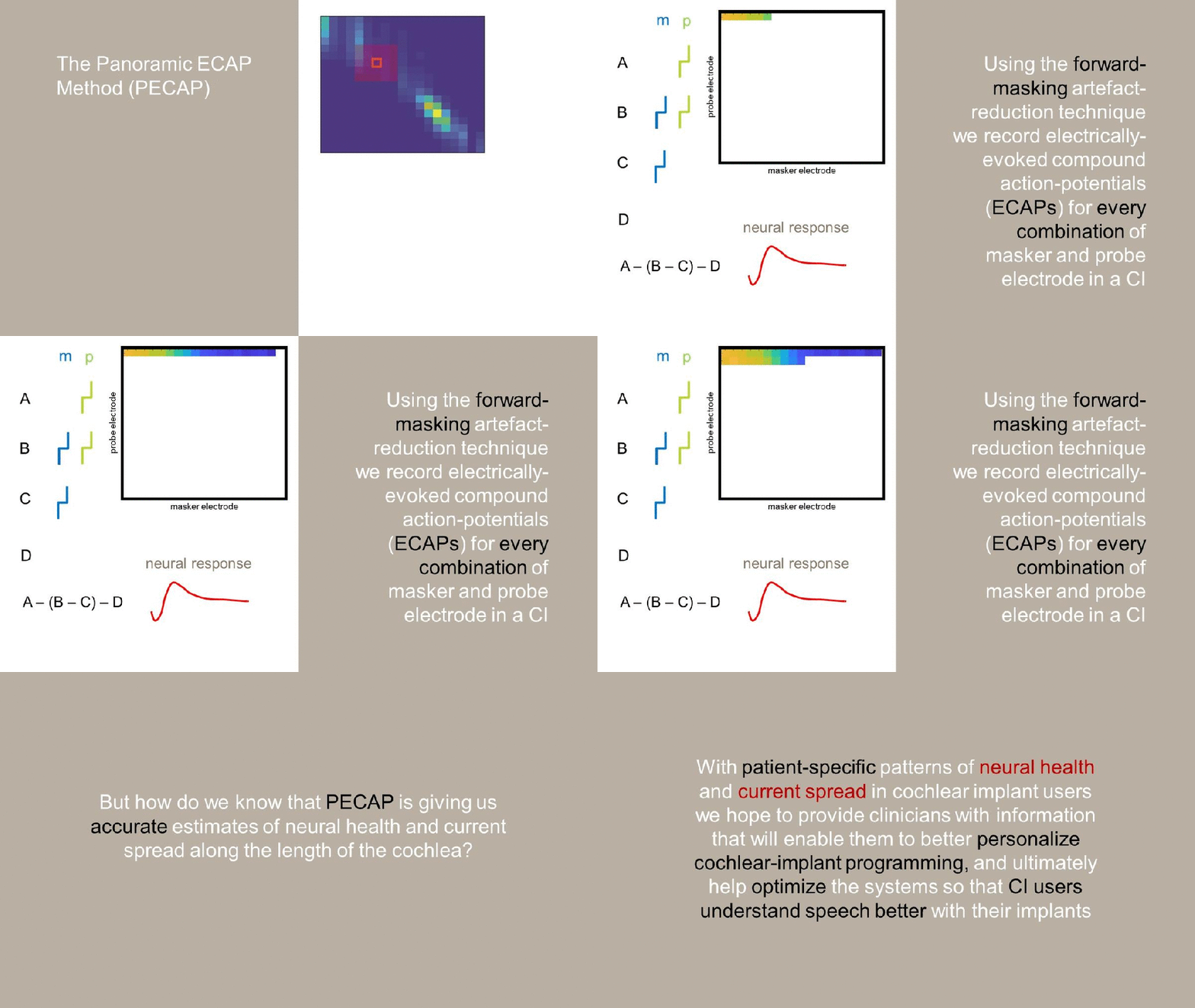
This graphic demonstrates the first experiment we did to verify that the neural responsiveness estimate was valid, by simulating a temporary neural ‘dead’ region within the cochlea of research volunteers with cochlear implants.
PECAP Online
We have developed an online implementation of the PECAP Method as a step towards implementing the technique in a clinical setting. The website provides users with the tools necessary to collect and analyse new PECAP data from cochlear-implant users.

You can visit the website here: https://panoramic-ecap.mrc-cbu.cam.ac.uk/
For research-specific extensions of the PECAP Method, you can download data-collection software from my GitHub for both Cochlear and Advanced Bionics Devices. Implementation in the MEDEL platform is currently in progress.
Collaborators









Funders
I am particularly grateful for the award of both a CIND and an MRC IAA grant for supporting the development of the PECAP Online website. This work has also been funded through the University of Cambridge WD Armstrong Fund and the Cambridge Trust.



References
Garcia, C., Goehring, T., Guérit, F., Arzounian, D., & Carlyon, R. P. (2025).
A comparison of electrophysiological measures for characterizing the cochlear implant electrode-neuron interface. JASA Express Letters, 5, 082001. https://doi.org/10.1121/10.0038746
Garcia, C., & Carlyon, R. P. (2025). Assessing Array-Type Differences in Cochlear Implant Users Using the Panoramic ECAP Method. Ear and Hearing, online ahead of print. https://doi.org/10.1097/AUD.0000000000001673
Peng, T., Garcia, C., Haneman, M., Shader, M., Carlyon, R. P., & McKay, C. (2025). Comparing Patient-Specific Variations in Intra-Cochlear Neural Health Estimated Using Psychophysical Thresholds and Panoramic Electrically Evoked Compound Action Potentials (PECAPs). Journal of the Association for Research in Otolaryngology, 26(1), 77–91. https://doi.org/10.1007/s10162-024-00972-z
Garcia, C., Morse-Fortier, C., Guerit, F., Hislop, S., Goehring, T., Carlyon, R. P., & Arenberg, J. G. (2024). Investigating the effect of blurring and focusing current in cochlear implant users with the Panoramic ECAP method. Journal of the Association for Research in Otolaryngology: JARO, 25, 591–609. https://doi.org/10.1007/s10162-024-00966-x
Garcia, C., Deeks, J. M., Goehring, T., Borsetto, D., Bance, M., & Carlyon, R. P. (2023). SpeedCAP: An Efficient Method for Estimating Neural Activation Patterns Using Electrically Evoked Compound Action-Potentials in Cochlear Implant Users. Ear and Hearing, 44(3), 627-640. https://doi.org/10.1097/AUD.0000000000001305
Garcia, C. (2022). The Panoramic ECAP Method: Estimating patient-specific patterns of current spread and neural health in cochlear-implant users. Dissertation. University of Cambridge. https://www.repository.cam.ac.uk/handle/1810/341691
Garcia, C., Goehring, T., Cosentino, S., Turner, R. E., Deeks, J. M., Brochier, T., Rughooputh, T., Bance, M., & Carlyon, R. P. (2021). The Panoramic ECAP Method: Estimating Patient-Specific Patterns of Current Spread and Neural Health in Cochlear Implant Users. Journal of the Association for Research in Otolaryngology: JARO, 22(5), 567–589. https://doi.org/10.1007/s10162-021-00795-2
Cosentino, S., Gaudrain, E., Deeks, J. M., & Carlyon, R. P. (2015). Multistage Nonlinear Optimization to Recover Neural Activation Patterns From Evoked Compound Action Potentials of Cochlear Implant Users. IEEE Transactions on Biomedical Engineering, 64(4), 833-840. https://doi.org/10.1109/TBME.2015.2476373
 Charlotte Garcia